Toolbox — For Training and Youth Work
All new tools in your inbox: Be the first to know about new tools for learning with our e-mail notifications.
Manual
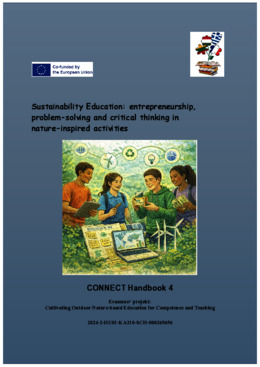
Sustainability Education Handbook 4: entrepreneurship, problem-solving and critical thinking in nature-inspired activities
Handbook 4 in the nature‑based education CONNECT series combines theory, global good practices and outdoor lesson plans. It helps teachers develop learners’ problem‑solving, creativity and responsible innovation through nature‑inspired activities.
Aims of the tool
This Handbook, one of four educational manuals (project ourtcomes of the Erasmus+ CONNECT project), supports teachers and youth workers in developing learners’ entrepreneurial thinking, problem‑solving and critical‑thinking skills through outdoor, nature‑inspired activities. It aims to help young people see sustainability as a space for opportunity, creativity and responsible action, not only as obligation.
Description of the tool
This Handbook (along with three others in the CONNECT Handbook series) is designed to help educators strengthen sustainability competences through experiential, outdoor learning. It is organised into three sections:
1. Theory on sustainability, entrepreneurship and nature‑inspired innovation
2. International good practices showing how environmental challenges can become opportunities
3. Ready‑to‑use outdoor lesson plans that guide learners through observation, idea generation and responsible action
The activities encourage creativity, teamwork, systems thinking and hands‑on exploration of local environmental challenges. Learners observe natural processes, identify needs, design solutions and reflect on environmental, social and economic impacts.
The learning outcomes include:
- improved problem‑solving and critical‑thinking skills
- increased creativity and initiative through nature‑inspired tasks
- understanding of sustainability as opportunity, not only responsibility
- ability to turn ideas into action in a responsible way
- stronger cooperation and communication skills
- practical experience with designing simple eco‑solutions or awareness actions
- deeper connection to nature as a model for innovation and resilience
All Handbooks are available in English, French, Greek, Hungarian and Lithuanian at the project website:
https://aksantys.com/cultivating-outdoor-nature-based-education-launch-of-connect-project/
Disclaimer
SALTO cannot be held responsible for the inappropriate use of these training tools. Always adapt training tools to your aims, context, target group and to your own skills! These tools have been used in a variety of formats and situations. Please notify SALTO should you know about the origin of or copyright on this tool.
Tool overview
http://toolbox.salto-youth.net/5903
This tool is for
Teachers and youth workers in secondary education, adaptable for primary learners and teacher‑training contexts; suitable for mixed‑ability groups and inclusive learning settings.
and addresses
Environment
It is recommended for use in:
Training and Networking
Materials needed:
Outdoor space (schoolyard, park, garden, local natural green area, forest, etc.)
Basic stationery (paper, pens).
Simple materials for prototyping (optional).
Natural objects found on site.
Mobiles phones for taking photos (optinal).
No specialised equipment required.
Duration:
The Handbook can support single entrepreneurship‑focused sessions or longer project‑based learning cycles.
Behind the tool
The tool was created by
Erasmus+ Project: Cultivating Outdoor Nature-based Education for Competence and Teaching
in the context of
Erasmus+ project
The tool has been experimented in
Our own shools with our students + during project student exchange programmes
The tool was published to the Toolbox by
Lídia Szabó (on 28 July 2026)
and last modified
25 July 2026
Comments
No comments have been posted yet.
If you want to comment on this tool, you need to be signed in with your MySALTO account. Sign in now