Toolbox — For Training and Youth Work
All new tools in your inbox: Be the first to know about new tools for learning with our e-mail notifications.
Simulation Exercise, Exercise, Video, Energiser, Presentation, Background Text, Manual, CD-Rom, Report, Group Division, Ice-breaker, Group Building Activity, Name Game/Get to know each other, Boardgame, Info session
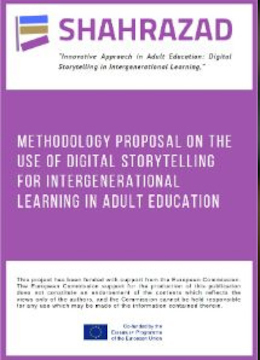
Methodology Proposal on the Use of Digital Storytelling for Intergenerational Learning in Adult Education
Development of the methodology for Digital Storytelling and Intergenerational learning methods in adult education is a resource for anyone who is interested in telling and sharing stories!
Aims of the tool
We know how valuable the need for 'expression' is from ancient times to the last day. In fact, our most effective and special tool that meets this need is STORIES. It is looking for the most unpretentious and plain form of transmission, and one of our main goals within the scope of this project is to bring together the stories at the same point with today's technology and to connect the generations. That's why we developed our Digital Storytelling project.
We named our project E-SHAHRAZAD, which was inspired by "One Thousand and One Nights".
Our goals within the scope of our E-SHAHRAZAD project;
* Bringing together our adults over 55 and the young generation between the ages of 13-25, ensuring intergenerational transfer, improving communication
*To help our adults over the age of 55 adapt to today's technology and gain ICT skills
*To develop the digital skills of our target groups (video editing, social media, İmovie, etc.), using the media as auxiliary material, communication, learning, expressing the experience, understanding the narrative, shaping the narrative with storytelling.
*To increase the basic reading skills of our young generation between the ages of 13-25 and to adapt their current skills to the current world.
*To create resources available online 24/7 at local and international level
Description of the tool
Digital storytelling is a participatory, visual method for people to produce, exchange and disseminate knowledge in today’s digital world. Adults in the community education space are offered the opportunity to learn about self, others and their own place in the world. Educators experienced in Lambert’s process believe it fosters transformative and insightful learning in this respect.
To investigate the possibilities of Digital Storytelling in Intergenerational Learning and to develop the proposal of the methodology for the educators based on these approaches, we explored the learning needs of younger and older participants and the competences and skills that educators should have in order to organise digital storytelling training in an intergenerational learning setting through:
Literature review made by project partners concerning the intergenerational learning (IGL) approach and digital storytelling (Chapter 1)
Open discussion between partners and digital storytelling experts from Loughborough University (Chapter 2)
Focus group interviews conducted with educators — experts in teaching older adults and/or younger people and/or working within intergenerational learning settings (Chapter 3) and also with students aged 13-25 and over 55 years old (Chapter 4).
Academic point of view on Digital Storytelling in Intergenerational Learning (Chapter 5)
The focus group made up of young and senior students allowed us to understand how to organize intergenerational learning (IGL) and digital storytelling’s methodology, starting with the students as main actors of this process.
As a result of the interviews (Chapter 3 and 4), it emerged that narrative, using song lyrics, retelling experiences and emotions, and narration with drawing and games, are all methods that allow them to involve students and create a trusting relationship between the tutors and their students. Narrative helps create a welcoming environment based on trust that fosters mutual listening. Nonetheless, traditional storytelling is preferred to digital storytelling because it comprises better body communication and gestures, and because participants (mostly the senior ones) favour more traditional tools. Digital storytelling use in IGL setting is still underestimated.
A possible Methodology of Digital Storytelling in Intergenerational learning has been proposed (Chapter 5). It was considered that IGL digital storytelling is a methodological way for the co-evolution of the contents proposed by individual narrations and product cooperation: it becomes a new intangible and collective heritage.
The data in this report will serve as a base for the educational resources that will be developed in further phases of the project “E-SHAHRAZAD. Innovative Approach in Adult Education: Digital Storytelling in Intergenerational Learning”.
Available downloads:
Disclaimer
SALTO cannot be held responsible for the inappropriate use of these training tools. Always adapt training tools to your aims, context, target group and to your own skills! These tools have been used in a variety of formats and situations. Please notify SALTO should you know about the origin of or copyright on this tool.
Tool overview
http://toolbox.salto-youth.net/3107
This tool is for
Adults over 55 and young people between the ages of 13-25
and addresses
Youth Initiatives, Intercultural Learning, Personal Development, Organisational Management, Peer education
It is recommended for use in:
Strategic Partnerships
Capacity Building
Behind the tool
The tool was created by
Association Culturelle des Jeunes Turcs de Bar le Duc
The tool was published to the Toolbox by
Fatma Akay (on 11 February 2022)
and last modified
29 December 2021
Comments
No comments have been posted yet.
If you want to comment on this tool, you need to be signed in with your MySALTO account. Sign in now