Toolbox — For Training and Youth Work
All new tools in your inbox: Be the first to know about new tools for learning with our e-mail notifications.
Manual
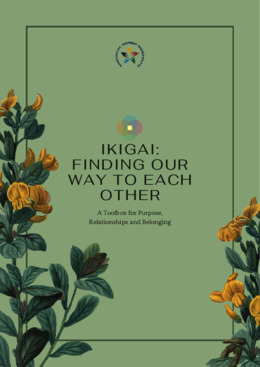
IKIGAI: Finding Our Way to Each Other – A Toolbox for Purpose, Relationships and Belonging
A practical toolbox combining Ikigai and connection-building activities to help young people explore their purpose, strengthen relationships and develop a sense of belonging.
Aims of the tool
The main aim of this toolbox is to provide practical and adaptable methods that help young people explore their personal purpose, develop self-awareness and build meaningful relationships.
Its specific aims are to:
Encourage young people to explore their interests, strengths, values and future aspirations through the concept of Ikigai.
Strengthen interpersonal skills, including communication, active listening, empathy, cooperation and perspective-taking.
Promote meaningful human connections, socialisation, mutual understanding and a sense of belonging.
Encourage creativity and self-expression as tools for personal development and discovering new possibilities.
Help young people connect their personal interests and abilities with the needs of others and their communities.
Support youth workers, educators and organisations in creating inclusive, participatory and engaging learning environments.
Provide practical methods that can be adapted to different age groups and educational and youth work settings.
Description of the tool
IKIGAI: Finding Our Way to Each Other – A Toolbox for Purpose, Relationships and Belonging is a practical learning resource developed as a continuation of the Erasmus+ Youth Exchange project The Lost Art of Connection, implemented in Trakai, Lithuania, in September 2026.
The toolbox responds to challenges young people face in today's fast-paced and increasingly individualised society, where meaningful face-to-face interaction, maintaining relationships and finding a sense of purpose can become difficult.
It brings together two complementary pillars:
1. Ikigai – Discovering Purpose in Life
This pillar encourages young people to explore their interests, abilities, values, aspirations and possible contributions to society. Through creative and reflective activities, participants are invited to recognise their strengths, discover what motivates them and consider how their personal qualities can connect with future opportunities. The toolbox presents Ikigai as an ongoing process of self-discovery rather than a single answer that everyone must find.
2. Connection Building – Reconnecting Young People
This pillar focuses on developing meaningful relationships and strengthening interpersonal competences. Through interactive group activities, role-play, storytelling and teamwork, participants practise communication, active listening, empathy, cooperation and perspective-taking. The activities also encourage reflection on socialisation, individualisation, trust and belonging.
What does the toolbox include?
The resource contains:
A practical activity library with Ikigai-focused and connection-building activities.
Step-by-step instructions, objectives, target groups, duration, materials and debriefing questions for each activity.
Ready-made workshop plans for 45-minute sessions, 90-minute workshops and half-day programmes.
Printable worksheets, Ikigai reflection cards and connection-building conversation cards.
Evaluation tools to support reflection on learning outcomes.
Guidance on adapting activities to different age groups and educational settings.
Practical examples and case studies demonstrating how young people can turn their ideas into meaningful community contributions.
The activities are primarily designed for young people aged 13–30 and can be adapted for high schools, universities, youth centres, youth exchanges and local communities. The toolbox can be used by youth workers, educators, teachers, facilitators, youth organisations and young people themselves.
Learning outcomes
By using this toolbox, participants are expected to:
Develop greater self-awareness by identifying their interests, strengths, values and aspirations.
Recognise possible connections between personal purpose, everyday experiences and contribution to society.
Improve their communication and active listening skills.
Develop empathy and become more aware of different perspectives and experiences.
Strengthen cooperation, teamwork and interpersonal relationships.
Explore the importance of socialisation, trust, mutual support and belonging.
Develop creativity, critical reflection and problem-solving skills through interactive activities.
Identify practical ways to contribute to their communities and take small steps towards personal or collective initiatives.
For facilitators, the toolbox also provides opportunities to develop skills in designing non-formal learning activities, adapting methods to different groups, encouraging inclusive participation and supporting reflection and evaluation.
The toolbox follows a flexible, experiential and learner-centred approach. Activities can be selected individually or combined into complete workshops according to participants' needs, available resources and learning objectives.
Our aim is to make these methods accessible beyond the original Erasmus+ project and encourage more organisations and individuals to create environments where young people can discover themselves, connect with others and actively contribute to their communities.
Disclaimer
SALTO cannot be held responsible for the inappropriate use of these training tools. Always adapt training tools to your aims, context, target group and to your own skills! These tools have been used in a variety of formats and situations. Please notify SALTO should you know about the origin of or copyright on this tool.
Tool overview
http://toolbox.salto-youth.net/6173
This tool is for
The toolbox is designed for: Young people aged 13–30 who want to explore their personal interests, strengths, values and aspirations while developing meaningful relationships and interpersonal skills. Youth workers and youth organisations: To organise non-formal education activities, workshops and youth exchanges. Teachers and educators: To integrate self-discovery, communication, empathy and teamwork activities into educational settings. High schools and universities: To support students' personal development, social interaction, peer learning and sense of belonging. Youth centres and community organisations: To encourage social inclusion, participation, creativity and community engagement. Municipalities and local authorities: To support youth participation, community initiatives and youth-led projects. Facilitators and trainers: To access practical methods and ready-made workshop plans that can be adapted to different groups and learning environments. The activities are suitable for individuals and groups, with methods that can be adapted to participants' ages, backgrounds, experiences and specific needs.
and addresses
Youth Initiatives, Personal Development, Youth Participation
It is recommended for use in:
Youth Exchanges
Behind the tool
The tool was created by
Viktorija Zalyte - Legal Representative of Asociacija Jaunimo Horizontai
The tool was published to the Toolbox by
Viktorija Zalyte (on 16 November 2026)
and last modified
10 November 2026
Comments
No comments have been posted yet.
If you want to comment on this tool, you need to be signed in with your MySALTO account. Sign in now