Toolbox — For Training and Youth Work
All new tools in your inbox: Be the first to know about new tools for learning with our e-mail notifications.
Manual
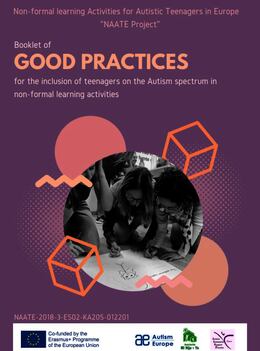
Booklet of Good Practices for the inclusion of teenagers on the Autism spectrum in non-formal learning activities
The booklet aims to provide valuable information for designing and developing non-formal learning activities in order to achieve positive interactions and improve learning for autistic teenagers.
Aims of the tool
The purpose of this booklet is to provide helpful
ideas for leisure and non-formal activities in order
to achieve positive interactions and improve
learning for autistic teenagers.
It provides valuable information for designing and
developing non-formal learning activities and
leisure activities such as art, yoga, sailing, activities
with animals that can support mainly the
development of the communication and social skills
for autistic teenagers.
Description of the tool
The inclusion of autistic teenagers in non-formal learning activities such as art, yoga, sailing and activities with animals can support the development of their social skills. The NAATE project has been working to deliver trainings to youth workers in order to support them in developing their professional skills to provide non-formal learning activities to autistic teenagers.
To make information about the inclusion of autistic teenagers in non-formal learning available on a larger scale, project partners created a Booklet of Good Practice. The booklet aims to provide valuable information for designing and developing non-formal learning activities in order to achieve positive interactions and improve learning for autistic teenagers.
To create the booklet, an online platform was utilised to help project partners reach out to individuals and organisations to gather initiatives and good practices for implementing non-formal learning activities. Project partners developed specific criteria for selecting the practices which took safety, infrastructure and methodology into consideration. The booklet includes practical tips for conducting non-formal educational activities and 4 detailed examples of good practices from different types of activities.
Available downloads:
Disclaimer
SALTO cannot be held responsible for the inappropriate use of these training tools. Always adapt training tools to your aims, context, target group and to your own skills! These tools have been used in a variety of formats and situations. Please notify SALTO should you know about the origin of or copyright on this tool.
Tool overview
http://toolbox.salto-youth.net/2934
This tool is for
The information that follows in the activities can be useful for staff, custodians and family members that interact with autistic teenagers. All these activities can be used all year-round, by schools, organizations and even by families. These activities were designed and developed from respected experts in the field of autism, art, extracurricular activities, and sports. While this booklet is not intended to be a curriculum for non-formal activities, people working or interacting with autistic teenagers may find it helpful for information and resources for their schools, organizations, or summer camps.
and addresses
Social Inclusion
It is recommended for use in:
Strategic Partnerships
Duration:
20min
Behind the tool
The tool was created by
Unknown.
(If you can claim authorship of this tool, please contact !)
The tool was published to the Toolbox by
valentina platzgummer
and last modified
14 October 2020
Comments
No comments have been posted yet.
If you want to comment on this tool, you need to be signed in with your MySALTO account. Sign in now