Toolbox — For Training and Youth Work
All new tools in your inbox: Be the first to know about new tools for learning with our e-mail notifications.
Simulation Exercise, Exercise, Energiser, Manual, Ice-breaker, Group Building Activity
BAVUL (SUITCASE) : TOOLS FOR HEALTHY LIVING AND RESILIENCE
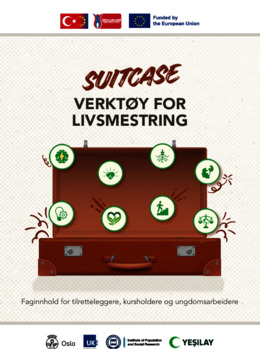
Suitcase: Tools for Healthy Living and Resilience an Erasmus+ facilitator guide with 8 interactive modules helping migrant youth (13–18) build resilience, life skills, and self-awareness to prevent addiction, using a rights-based, youth-centered approach.
Aims of the tool
To design and implement a comprehensive prevention model that empowers migrant youth aged 13–18 to develop life skills, resilience, and self-awareness as protective factors against addiction and risky behaviors. Rather than framing addiction as an individual weakness, the model approaches it through a social and developmental lens — recognizing how stress, inequality, discrimination, and limited access to support systems shape vulnerability.
Additional layered aims include:
Inclusivity: engaging both girls and boys equally, addressing the shared experiences of migration, cultural adaptation, and social harmony specific to this age group
Capacity-building: equipping facilitators, trainers, and youth workers with interactive tools to lead workshops that promote awareness, self-regulation, and belonging
Knowledge transfer: contributing effective, adaptable methodologies that can be adopted both nationally and internationally, building on collaborative research, field experience, and youth perspectives from the Türkiye–Germany–Norway partnership
Description of the tool
This tool is a comprehensive, ready-to-use facilitator guide developed under the Erasmus+ Cooperation Partnership project "Developing a Prevention Model Against Addiction for Migrant Youth" 2023-2-TR01-KA220-YOU-000180027), coordinated by the Turkish Green Crescent Society (Yeşilay) in partnership with Marmara University (Türkiye), Universitätsklinikum Hamburg-Eppendorf (Germany), and the Agency of Social and Welfare Services of the City of Oslo (Norway).
Rather than treating addiction as an individual weakness, the guide frames it through a social and developmental lens — recognizing how stress, displacement, discrimination, and limited access to support systems shape young people's vulnerability. It is built on three interlocking principles: a rights-based approach (grounded in non-discrimination, participation, and accountability), a youth-centered approach (treating young people as active agents of change, not passive recipients), and a strengths-based approach (building on existing capacities and resilience rather than focusing on deficits).
The guide contains 8 thematic modules, each with multiple interactive, experiential activities (individual exercises, group discussions, role-play, creative and reflective methods), plus a full set of icebreakers/energizers and practical guidance for facilitating with migrant and multilingual youth (cultural sensitivity, language inclusion, consent, psychological safety).
The 8 modules:
1. Introduction to Addictions
2. Understanding Trauma and Stress
3. Building Resilience and Coping Skills
4. Supporting Identity Development through Cultural Transition
5. Critical Thinking – Making Informed Decisions
6. Health and Well-being (including digital habits and sleep)
7. Life Skills (decision-making, budgeting, communication)
8. Knowing Your Rights
Learning Outcomes
By the end of the programme, young participants will be able to:
- Recognize the basic mechanisms of addiction, including the shift from "liking" to "wanting/craving," and make more informed, healthier choices
- Identify common trauma and stress responses (intrusion, hyperarousal, avoidance) and understand these as normal reactions rather than personal failings
- Apply concrete coping strategies (e.g. safe-place visualization, body scan, breathing/relaxation techniques) to manage stress and difficult emotions
- Reflect on and articulate their evolving sense of identity across cultural transition, balancing heritage and new environment
- Apply critical thinking skills to real-life scenarios involving peer pressure, risk, and decision-making
- Assess their own digital habits and build healthier digital and sleep routines
- Practice core life skills, including prioritization, budgeting, cooperative problem-solving, and constructive communication
- Understand their fundamental rights as children and young people (including under the UN Convention on the Rights of the Child) and their employment rights, and gain confidence to advocate for themselves
Facilitators, in turn, gain a structured yet flexible toolkit — including step-by-step activity instructions, timing, materials, and adaptation tips — to deliver trauma-informed, culturally sensitive, rights-based sessions to migrant youth aged 13–18, regardless of group size, language mix, or setting.
The module was translated to Norwegian with the guidence of Agency of Social and Welfare Services, The City of Oslo (Norway).
Available downloads:
Disclaimer
SALTO cannot be held responsible for the inappropriate use of these training tools. Always adapt training tools to your aims, context, target group and to your own skills! These tools have been used in a variety of formats and situations. Please notify SALTO should you know about the origin of or copyright on this tool.
Tool overview
http://toolbox.salto-youth.net/6007
This tool is for
Primary target group: Migrant and refugee youth aged 13–18 Secondary target group (users of the tool): Facilitators, trainers, youth workers, teachers, and social service professionals who work directly with migrant and refugee youth.
and addresses
YOUTH in ACTION (YiA) programme
Behind the tool
The tool was created by
Turkish Green Crescent Society (Türkiye), Marmara University (Türkiye), Universitätsklinikum Hamburg-Eppendorf (UKE) (Germany), Agency of Social and Welfare Services, The City of Oslo (Norway)
in the context of
This tool was created by an international partnership under the Erasmus+ Cooperation Partnerships in Youth (KA220-YOU) programme, project "Developing a Prevention Model Against Addiction for Migrant Youth" (2023-2-TR01-KA220-YOU-000180027)
The tool has been experimented in
Training, Learning
The tool was published to the Toolbox by
Ayşe Feda Kaya (on 16 November 2026)
and last modified
21 September 2026
Comments
No comments have been posted yet.
If you want to comment on this tool, you need to be signed in with your MySALTO account. Sign in now