Toolbox — For Training and Youth Work
All new tools in your inbox: Be the first to know about new tools for learning with our e-mail notifications.
Manual
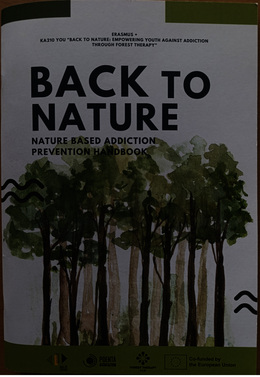
BACK TO NATURE – Nature-Based Addiction Prevention Handbook
A practical handbook in three languages for youth workers and educators, combining theory and nature-based activities to strengthen young people’s emotional well-being, stress management, motivation and resilience and support addiction prevention.
Aims of the tool
The handbook (available in three languages) aims to:
- Promote young people's mental well-being and resilience through reconnection with nature.
- Support addiction prevention by strengthening protective factors such as emotional regulation, stress management, motivation, healthy habits and self-esteem.
- Equip youth workers and educators with practical, nature-based methods and activities for working with young people.
- Encourage creativity, peer-to-peer learning, social connection and supportive relationships.
- Raise awareness of the positive role of nature in health and well-being.
- Promote inclusive, accessible and innovative approaches in youth work.
The overall aim is to empower young people with knowledge and practical skills that help them cope with everyday challenges and make healthier life choices.
Description of the tool
Back to Nature is a practical handbook for youth workers and educators, offering nature-based activities to support young people’s mental well-being, resilience and addiction prevention. The handbook is available in three languages: English, Slovenian and Serbian. It is provided in a printable PDF format.
It consists of eight modules covering emotions, stress, addiction, motivation, creativity, nature and health, peer-to-peer learning and practical activities. It combines simple exercises, creative methods and group activities that can be adapted to different youth groups.
Learning outcomes
By using the handbook, young people can:
- Better understand and manage their emotions and stress.
- Recognise risk factors and develop healthier habits.
- Strengthen motivation, resilience and self-awareness.
- Improve creativity, communication and cooperation.
- Discover how connecting with nature can support well-being.
Youth workers and educators gain practical methods for using nature-based activities in non-formal education and addiction prevention.
Available downloads:
Disclaimer
SALTO cannot be held responsible for the inappropriate use of these training tools. Always adapt training tools to your aims, context, target group and to your own skills! These tools have been used in a variety of formats and situations. Please notify SALTO should you know about the origin of or copyright on this tool.
Tool overview
http://toolbox.salto-youth.net/6201
This tool is for
Youth workers, educators, teachers, staff of Health Promotion Centres, and young people interested in nature-based activities, mental well-being and addiction prevention.
and addresses
Social Inclusion, Personal Development, Youth Participation, Environment
It is recommended for use in:
Strategic Partnerships
Materials needed:
Activities are mostly carried out outdoors, in natural environments, where natural objects such as leaves, stones, sticks and cones are easy to find. Paper and pens are needed for creative activities.
Duration:
The duration depends on the participants’ needs and the decision to carry out all activities or only selected exercises. Each exercise takes approximately one hour, while the programme can also be implemented over several days.
Behind the tool
The tool was created by
Forest Therapy Hub in collaboration with project partners: Secondary School of Forestry, Wood technology and Health Care Postojna (Slovenia) and POENTA (Serbia).
in the context of
The handbook was developed within the Erasmus+ KA210 YOU project “Back to Nature: Empowering Youth Against Addiction through Forest Therapy” (2025–2026), implemented by partner organisations. It was created as a practical educational resource to strengt
The tool has been experimented in
The tool was tested and developed through project activities, including practical workshops with young people in Slovenia and Serbia. The activities included testing and adapting nature-based exercises, collecting feedback and improving the methods presen
The tool was published to the Toolbox by
Tamara Urbancic (on 24 November 2026)
and last modified
23 November 2026
Comments
No comments have been posted yet.
If you want to comment on this tool, you need to be signed in with your MySALTO account. Sign in now