Toolbox — For Training and Youth Work
All new tools in your inbox: Be the first to know about new tools for learning with our e-mail notifications.
Simulation Exercise
Youth European Parliament Learning methods
A practical guide to replicate the YEP simulation model: how to turn young people into MEPs for a week using non-formal education, political compass grouping, legislative simulations, and territorial visits to connect EU policy to local reality.
Aims of the tool
To empower youth workers and local organisations to replicate EU Parliament simulations in their own communities, fostering critical thinking, democratic participation and European awareness among young people with fewer opportunities.
Description of the tool
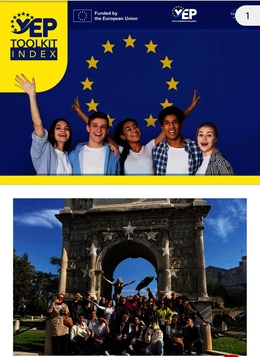
The YEP Toolkit is a step-by-step methodological guide created from the Erasmus+ project "Youth European Parliament" (KA154-YOU-000303315), coordinated by Pro Loco "Ugo Pedicini" of Foglianise, Italy, with partners from Turkey, Lithuania, Bulgaria, Portugal, Slovakia and Cyprus.
The toolkit documents how a small rural association transformed over 40 young people from 7 countries into Members of the European Parliament for one week, using entirely non-formal education methods. It is designed to be replicable by any youth organisation, regardless of size or previous experience with EU-funded projects.
The toolkit is structured in 5 modules:
Module 1 - Activation and Group Building: how to break national barriers using a "Political Compass" quiz to form transnational political groups based on shared values, not nationality. Includes ice-breaking methods and party-building workshops.
Module 2 - Legislative Process Simulation: detailed instructions to run committee simulations (LIBE on migration, ENVI on environment), a lobbying exercise, a crisis management simulation with press conference, and a technical hearing (ECB format). Each simulation replicates a real step of EU decision-making.
Module 3 - Territorial Connection: how to use local visits (farms, producers, protected areas) as learning tools to connect EU policies like the Green Deal, Natura 2000 and PDO labels to the real local economy.
Module 4 - Evaluation and Follow-up: pre and post assessment methods using Genially, daily debriefing techniques, and the "Ambassador Mission" follow-up model.
Module 5 - Institutional Dialogue: how to organise a public conference connecting participants, academic experts and local citizens, including the anonymous digital Q&A method to overcome the fear of asking questions.
Learning outcomes for participants include: understanding of EU institutions and legislative processes; ability to draft amendments and negotiate compromises; critical thinking about complex policy issues; public speaking and argumentation skills; intercultural cooperation and tolerance; awareness of how EU regulations impact local communities. The project recorded a measurable increase of 43.9 points in EU knowledge (from 45.9% to 89.8%) and a jump in self-reported confidence from 19.5% to 82.9%.
The toolkit is available in English and can be adapted to any local context.
Available downloads:
Disclaimer
SALTO cannot be held responsible for the inappropriate use of these training tools. Always adapt training tools to your aims, context, target group and to your own skills! These tools have been used in a variety of formats and situations. Please notify SALTO should you know about the origin of or copyright on this tool.
Tool overview
http://toolbox.salto-youth.net/5499
This tool addresses
European Citizenship
It is recommended for use in:
Youth Exchanges
Behind the tool
The tool was created by
Unknown.
(If you can claim authorship of this tool, please contact !)
The tool was published to the Toolbox by
ROCCO PALUMBO (on 9 March 2026)
and last modified
6 March 2026
Comments
No comments have been posted yet.
If you want to comment on this tool, you need to be signed in with your MySALTO account. Sign in now