Toolbox — For Training and Youth Work
All new tools in your inbox: Be the first to know about new tools for learning with our e-mail notifications.
Manual
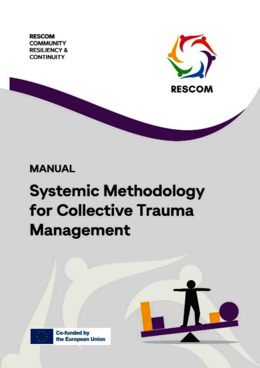
Systemic Methodology for Collective Trauma Management in Youth
Systemic methodology for managing collective & social trauma in youth following crises & disasters. Includes therapeutic interventions, tools & best practices grounded in systemic psychotherapy. Erasmus+ ResCom project (Cyprus/Greece)
Aims of the tool
A systemic methodology for managing collective & social trauma in youth following crises & disasters. Includes therapeutic interventions, tools & best practices grounded in systemic psychotherapy. Erasmus+ ResCom project (Cyprus/Greece).
Description of the tool
The Systemic Methodology for Collective Trauma Management is an innovative, comprehensive resource developed under the Erasmus+ ResCom project (2023-3-CY02-KA210-YOU-000176655), a small-scale partnership between The Serendipitous Black Cloud Ltd (Cyprus) and Poreia Ygeias sce (Greece). It was developed in November 2025 by systemic psychotherapists from both partner organisations.This methodology is the most academically grounded and clinically oriented of the three ResCom deliverables. It is designed for mental health professionals, psychotherapists, counsellors, social workers, youth workers, educators and community practitioners who wish to apply a systemic approach to collective and social trauma management in youth aged 18-30. It is also tiered to include practitioners who are not mental health specialists, enabling its use in a wider range of community and youth work settings.The methodology is grounded in systemic psychotherapy theory and draws on narrative therapy, trauma-informed care, body-centred practice, art therapy, mindfulness-based approaches, energy-based therapy and interdisciplinary integration. It was informed by field research in Cyprus and Greece and includes real case examples, practitioner dialogues, guided exercises, reflection prompts and good practice examples throughout.The content is organised into 7 chapters:
Chapter 1 Introduction: collective trauma and its intergenerational transmission, the systemic approach to understanding and intervention, and interdisciplinary integration (psychotherapy, education, arts, body-centred practices, social work and community action)Chapter 2 Collective Trauma and Youth: youth aged 18-30 and trauma as a developmental experience, the professional caregiver as an agent of systemic resilience, the community as a therapeutic system, and working with marginalised and vulnerable youthChapter 3 Core Principles of the Systemic Approach: systemic thinking and the interdependence of people and contexts, trauma-informed care (safety, trust, empowerment), cultural sensitivity and the integration of diversity, and empowerment and the development of youth resilienceChapter 4 Assessment and Diagnosis: holistic assessment tools including combined questionnaires, body-emotion mapping, observation of regulation and creative expression assessment, and systemic mapping using genograms and ecomapsChapter 5 Systemic Interventions: group support for youth, energy-based therapy and meditation, art therapy and drama therapy, sensory integration techniques, mindfulness-based practices (MBSR), body-centred regulation and grounding exercises, with practical guided exercises throughoutChapter 6 Implementation and Evaluation Framework: training and implementation of systemic programmes, cultural adaptation, programme design, and systemic evaluation tools including psychological, behavioural and systemic indicators, long-term recovery evaluation and community feedback methodsChapter 7 Observations, Challenges and Conclusions: historical and contemporary examples (including the 2023 Thessaly floods, Cyprus wildfires, and other crises), future directions of the methodology for wider populations, integration of new neurobiological research, and conclusions.
Knowledge
Understand collective and social trauma from a systemic perspective, recognising it as a relational and community phenomenon rather than solely an individual one
Understand the intergenerational transmission of trauma at psychological, somatic-neurobiological and systemic-relational levels
Recognise the specific impact of collective trauma on youth aged 18-30 during a critical developmental phase
Understand the role of the professional caregiver as a living element within the therapeutic system and the risks of secondary and vicarious trauma
Apply core principles of trauma-informed care including safety, trust, empowerment and cultural sensitivity within a systemic framework
Learning Outcomes:
Skills
Use holistic and systemic assessment tools including genograms, ecomaps, body-emotion mapping and creative expression assessment
Apply a range of systemic therapeutic interventions in both individual and group settings with youth
Facilitate guided meditation, grounding, breathing and body-centred regulation exercises with young people and groups
Use narrative therapy, art therapy, drama therapy and storytelling as therapeutic and community healing tools
Design and evaluate trauma-informed programmes for youth, families and communities using systemic principles
Apply circular and reflective questioning techniques in therapeutic and community settings
Map community systems and resources to support collective recovery and resilience
Attitudes
Approach collective trauma as a polyphonic, relational experience that requires community-level responses alongside individual support
Recognise the community as a therapeutic system and embrace an interdisciplinary, collaborative approach to recovery
Develop awareness of one's own cultural biases, emotional responses and professional limits when working with trauma
Embrace self-care, supervision and professional support as essential components of sustainable practice
View young people as active co-creators of meaning and recovery rather than passive recipients of help
For non-specialist practitioners
Apply accessible, tiered interventions suitable for youth workers, educators and volunteers without clinical training
Recognise when to refer to specialist mental health professionals and how to navigate referral pathways.
Available downloads:
Disclaimer
SALTO cannot be held responsible for the inappropriate use of these training tools. Always adapt training tools to your aims, context, target group and to your own skills! These tools have been used in a variety of formats and situations. Please notify SALTO should you know about the origin of or copyright on this tool.
Tool overview
http://toolbox.salto-youth.net/5534
This tool addresses
Personal Development
It is recommended for use in:
Strategic Partnerships
Behind the tool
The tool was created by
Unknown.
(If you can claim authorship of this tool, please contact !)
The tool was created in the context of
Community Resiliency & Continuity for Youth affected by Crises & Disasters Project Reference No: 2023-3-CY02-KA210-YOU-000176655
The tool was published to the Toolbox by
EIRINI KAMPA (on 24 March 2026)
and last modified
18 March 2026
Comments
No comments have been posted yet.
If you want to comment on this tool, you need to be signed in with your MySALTO account. Sign in now