Toolbox — For Training and Youth Work
All new tools in your inbox: Be the first to know about new tools for learning with our e-mail notifications.
Report
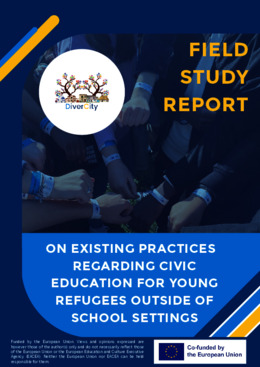
DiverCity Field Study Report on Existing Practices Regarding Civic Education for Young Refugees Outside of School Settings
A comparative field study examining civic education practices for young migrants and refugees outside of school settings across five EU countries (France, Greece, Italy, Spain, Poland), conducted as part of the EU-funded DiverCity project (Erasmus+ KA2).
Aims of the tool
This field study aims to:
1. Identify existing practices in civic education for young migrants and refugees outside of school settings across five EU partner countries (France, Greece, Italy, Spain, Poland)
2. Analyse the legal and political frameworks in which these practices take place at local, national and European level
3. Evaluate the effectiveness, feasibility and replicability of existing civic education practices for young refugees
4. Collect the perspectives of all actors involved: young refugees, youth workers, volunteers, and local/national authorities
5. Include young refugees in the construction of citizenship education practices through consultation, as a first step toward civic integration
6. Inform the development of new pedagogical tools within the DiverCity project, including activity sheets, an inclusion guide, a youth brochure, and a training kit
7. Promote non-formal and popular education methods (art, culture, sport, peer learning) as vehicles for civic education
8. Support intercultural dialogue and prevent social exclusion among young refugees settling in Europe
Description of the tool
This report presents findings from 37 interviews and 10 workshop observations conducted between October 2023 and January 2024 in France, Greece, Italy, Spain, and Poland. It analyses existing practices in civic and non-formal education for young refugees (aged 16–25) outside school settings, covering four main areas: general description of activities, goals and impacts, accessibility, and workshop methods. The study identifies language learning, legal support, psychological assistance, vocational training, and cultural integration as the dominant areas of support. It highlights both the strengths and gaps in current provision, particularly the need for more civic education content and better accessibility for marginalised groups, and informs the development of pedagogical tools within the DiverCity project.
Available downloads:
Disclaimer
SALTO cannot be held responsible for the inappropriate use of these training tools. Always adapt training tools to your aims, context, target group and to your own skills! These tools have been used in a variety of formats and situations. Please notify SALTO should you know about the origin of or copyright on this tool.
Tool overview
http://toolbox.salto-youth.net/5495
This tool is for
Youth workers, volunteers, local authorities, NGOs, policymakers
and addresses
European Citizenship
Behind the tool
The tool was created by
Parlement Européen des Jeunes France
in the context of
Erasmus+ KA2 – DiverCity (Project n° 2022-2-FR02-KA220-YOU-000101728)
The tool was published to the Toolbox by
Soukaina Touba (on 9 March 2026)
and last modified
3 March 2026
Comments
No comments have been posted yet.
If you want to comment on this tool, you need to be signed in with your MySALTO account. Sign in now