Toolbox — For Training and Youth Work
All new tools in your inbox: Be the first to know about new tools for learning with our e-mail notifications.
Manual
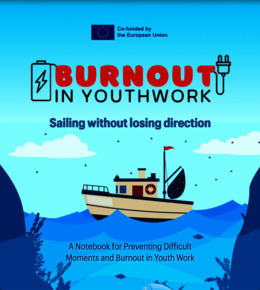
Sailing Without Losing Direction – A Notebook for Preventing Difficult Moments and Burnout in Youth Work
A practical notebook helping youth workers prevent burnout through self-awareness, reflection, boundary-setting, emotional debriefing and small, realistic coping actions for sustainable youth work.
Aims of the tool
The tool aims to support youth workers in recognizing and responding to stress, fatigue and difficult professional situations before they develop into burnout. It encourages self-awareness, emotional regulation, realistic boundary-setting and the identification of personal and collective resources that support sustainable youth work.
It also aims to help users distinguish between what is within their responsibility and what belongs to the wider organizational context, reducing the tendency to carry systemic problems as personal responsibilities.
Description of the tool
Sailing Without Losing Direction is a practical reflection and self-care notebook developed for people working with young people. It translates research findings on stress and burnout in youth work into accessible exercises that can be used individually or within training courses, team meetings, supervision and professional development activities.
The notebook guides users through different aspects of professional well-being, including understanding their role and responsibilities, recognizing personal signs of fatigue, checking their emotional energy, processing difficult situations, mapping sources of stress and meaning, reviewing professional boundaries, identifying support networks and practising small coping actions.
The tool includes eight main sections: Professional Framework; Daily Check-in/Check-out; After a Complex Meeting or Difficult Situation; Educational Workload Map; Periodic Review; Resources Backpack; Micro-coping Actions; and Free Space for Emotional Debriefing. Additional resources include a Stress Map, Priority Matrix, Body Tapping exercise and guidance on recognizing when professional or psychological support may be needed.
The activities are intentionally flexible: users can work through the notebook from beginning to end or return to specific sections when needed. They are not tests and have no right or wrong answers. The focus is on developing awareness, identifying early warning signs and strengthening personal and collective resources for sustainable youth work.
By using the notebook, youth workers can:
- recognize personal signs and patterns of stress, fatigue and potential burnout;
- increase awareness of their emotional energy and professional workload;
- distinguish personal responsibility from factors outside their control;
- identify situations that trigger stress, drain energy or provide meaning;
- reflect on and strengthen professional boundaries;
- identify personal skills, supportive people, safe spaces and activities that contribute to resilience;
- develop small and realistic coping actions for demanding moments;
- process emotionally difficult professional experiences through structured reflection and debriefing;
- identify when self-management is insufficient and additional organizational, supervisory or professional support is needed.
Available downloads:
Disclaimer
SALTO cannot be held responsible for the inappropriate use of these training tools. Always adapt training tools to your aims, context, target group and to your own skills! These tools have been used in a variety of formats and situations. Please notify SALTO should you know about the origin of or copyright on this tool.
Tool overview
http://toolbox.salto-youth.net/5991
This tool is for
Youth workers, educators, facilitators, trainers, social workers, volunteers and project coordinators
and addresses
Personal Development, Evaluation
It is recommended for use in:
European Voluntary Service
Training and Networking
Behind the tool
The tool was created by
ARNERA Cooperativa Sociale & Bloom Association
in the context of
KA210 "Burnout in Youth Work" (2024-1-PT02-KA210-YOU-000243873)
The tool was published to the Toolbox by
Chris Theodorou (on 7 September 2026)
and last modified
7 September 2026
Comments
No comments have been posted yet.
If you want to comment on this tool, you need to be signed in with your MySALTO account. Sign in now