- EuroMed Training Opportunities
- EuroMed Educational publications
- SALTO EuroMed Educational Tools
- ESC South-Med
- EVS Resources and background material
- About SALTO-YOUTH EuroMed
Let's meet the Three Cultures

Considering the situation of Meda countries - the absence of official National Coordinators - Salto Youth EuroMed, with the financial support of some National Agencies, covered travel costs for Meda particpants. EU candidates instead dealt with their own National Agencies for travel arrangements, while boarding-lodging costs were covered by the hosting national structure. Last but not least Salto Youth EuroMed took care of trainers' fees and expenses. So, we encouraged MEDA candidates to submit their "online" application forms as well as the one downloadable here after to the Salto Youth EuroMed Resouce Centre charged exceptionally of the Meda participants' selection. EU candidates simply filled in their "online" application forms!
Background:
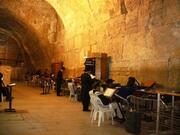
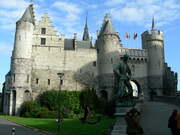
The three cultures, Christianity, Islam and Judaism, have been presenting in Cordoba since early times. The city of Antwerp was chosen for its interesting inter-religious background and its Jewish and Muslim districts.
The participants got to know and experience different aspects of the cultures, mean analysing their relation to them and creating tools to be applied in intercultural work.
Following the Training Course, the participants were expected to include their new knowledge regarding "Three Cultures" in future projects within the EuroMed YOUTH Programme.
Organisational Frame:
This training course was the result of a co-operation between SALTO-YOUTH EuroMed Resource Centre and JINT, the National Agency for the YOUTH programme in Belgium (Flemish Community)
The training course took place from October 7th, until October 15th 2006 in Antwerp (Belgium).
Working languages were English and French.
Participation was limited to 30 people.
Aims and Objectives:
This course aimed at developing Euro-Mediterranean co-operation, reinforcing the quality of the Euro-Med YOUTH Programme within an intercultural context, increasing the participants’ skills in cultural management and their active participation in the Euro-Mediterranean process.
The following concrete objectives had been set in order to reach the aims as described above:
- to know more about European and Mediterranean cultures and their relation with Christianity, Islam and Judaism;
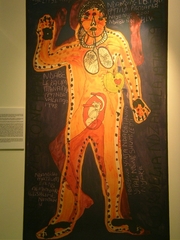
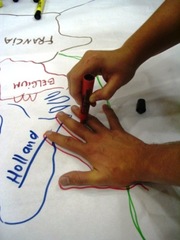
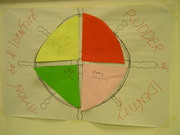
- to reflect on the participants’ own cultural identity;
- to identify common elements in relation with the other cultures;
- to be able to create together using the past to prepare a better future;
- to offer a framework for co-operation and coach the participants in the realisation of concrete partnerships within the Euro-Med YOUTH Programme.
Profile of participants
The course was intended to be an opportunity for further training for youth workers and youth leaders who:
- are experienced in the Euro-Med YOUTH Programme (Actions 1, 2 & 5);
- are open to enrich their knowledge and awareness regarding the three cultures;
- are committed to prepare themselves for the handled subjects, previous to their arrival and to do the remote work requested by the team in case of selection;
- are motivated to undergo training and able to attend the course for its full duration;
- are supported by their organisation and have green light for implementing a Euro-Med YOUTH project;
- are able to communicate and work in at least one of the three working languages of this training course (English, French and/or Spanish);
- are resident in a Member State of the European Union or in a Mediterranean country signatory to the Barcelona Declaration.
Expected Outcome
The participants were expected:
- to enrich their knowledge and awareness regarding the three cultures;
- to develop a project based on interculturality within the Euro-Med YOUTH Programme as a result of the course.
Methodology
The course was based on the principles and practice of non-formal education and was conceived to allow a learner-centred approach based on active and interactive methods. Participants needed to self organise part of the activities and thus took a personal responsibility for their learning process. They should be open to an experiential learning experience.
Specificity of this course
The symbol of the city of Jerusalem and its long inter-religious history was used as an educational tool. Intercultural activities were organised using different techniques and methods linked to communication tools such as: languages, arts, food, traditions, advertising, as well as the five senses.
The participants were divided into 4 groups according to 4 subjects:
- The Art of Living (Art de vivre)
- Thinking (scientists, philosophy, Schools etc.) (La Pensée)
- The Political power (Le Pouvoir Politique)
- The Economy (L'activité commerciale)
They had to make a research about the topic, how it was in the past; and they had to prepare and organise one active performance to provide these discoveries to the other participants; each topic needed to be crossed by two themes: the place of women and religion in each of these 4 topics in the past in order to be used during a debriefing and to reflect on today’s reality.
Programme Elements
The course programme addressed the following key modules (the modules were described by a set of issues which were indicative and not exhaustive and were developed further):
- Why Euro-Med co-operation projects?
- Communication and group dynamics
- Christianity, Islam, and Judaism within Euro-Med
- Definitions of culture, multiculturalism and interculturalism
- Inter-cultural awareness
- International teamwork
- Overall evaluation of the course
- Suggestions for follow-up
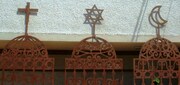 Let's meet the Three Cultures