- EuroMed Training Opportunities
- EuroMed Educational publications
- SALTO EuroMed Educational Tools
- ESC South-Med
- EVS Resources and background material
- About SALTO-YOUTH EuroMed
Training seminar: "Inter-religious Dialogue : Mediterranean, Caucasian and European contexts"
"Only in a tolerant environment will it be possible for everyone to freely manifest his or her religion or belief" Anonymous
The key to a happier and more successful world is the growth of compassion." -- the Dalai Lama
Deadline to apply expired
Background
Inter-religious Dialogue, for a better Understanding!
In a globalised world where intra- and inter-religious conflicts remain unabated, it may be necessary to grant greater attention to Dialogue. Intercultural and inter-religious dialogues are then seen as ever more essential tools for human development and peace building. Learning the art of dialogue is both a personal and social process. Developing one's skills and capacity for dialogue implies a willingness to be open while retaining one's critical judgment. Dialogue concerns us all: from decision-makers, trainers, youth leaders to individuals within each community.
Specificity of the venue
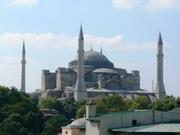
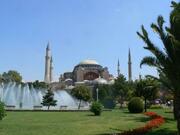
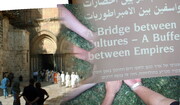
The city of Istanbul has many areas where people of very different religions have lived side-by-side for centuries with their practices and customs and continue to do. One can find Catholic, Orthodox, Protestant, Armenian Churches, Synagogues as well as Mosques where to practice the religion of his/her choosing.
This seminar will stand during the Ramadan and the Aid feast and we find this aspect particularly interesting to treat the subject of inter-religious dialogue. We already have treat several seminars during the Ramadan and we invite you to read the article on "Training in Ramadan" downloadable below (Coyote magazine N°9).
Aim
The main aim of this training seminar is to prepare youth workers to deal with religious issues in their job and to promote dialogue among the different religions, spiritual and humanistic traditions mainly in the Mediterranean, Caucasian and European contexts where conflicts are increasingly associated with religious belonging (as today there are concerns about toleration of other religious groups in Islamic states and manifestations of Islamophobia and anti-Semitism against European Muslims and Jews).
It stresses the reciprocal interactions and influences between, on the one hand, religions, spiritual and humanistic traditions, and on the other, the need to promote understanding between them in order to challenge ignorance and prejudices and foster mutual respect.
Objectives
On a more theoretical basis this training seminar will consider and analyse - on a "get-to-know" way - the major religions (distinguished from minor religions regarding the number of adherents) belonging to the Mediterranean, Caucasian and European contexts and give a coherent explanation of the historical development of religious ideas, institutions, and practices. These are: Christianity , Islam (which are together with Hinduism and Buddhism the largest world religions today representing approximately 75% of humanity) Judaism (which counts 14 million followers around the world) as well as other "irreligious" or secular approaches as Humanism, Atheism, Rationalism, Agnosticism and other movements (approximately 1 billion people adherents).
Thus the TS will tackle some key concepts as the meaning of religion, freedom of belief and freedom of worship, the individual choice not to follow any religion and not to believe in any god but also freedom of religion, religious toleration, separation of church and state or laïcité (secular state) and other notion necessary for a broad understanding of the major religious traditions that have influenced the development of the Euromed space (Judaism, Christianity, and Islam) as well as the ways in which church and state have related through history.
A special focus will be given to the reciprocal interactions and influences between, on the one hand, religions, spiritual and humanistic traditions, and on the other, the need to promote understanding between them in order to challenge ignorance and prejudices and foster mutual respect, considering that the promotion of religious toleration and inter-religious dialogue remain "of primordial importance," for the Youth in Action and Euromed Youth programmes.
The following concrete objectives have been set in order to reach the aims as described above:
1. To provide educational support and time for the participants to share and reflect about their own experiences and knowledge in the field of inter-religious dialogue
2. To disseminate the principles of inter-religious dialogue using different means.
3. To identify common elements in relation with the other religions that help participants built common understanding
4. To help and support participants in improving their competence (Knowledge, Skills, Attitudes and Values) in the field of inter-religious dialogue.
5. To allocate space for the participants to develop project ideas in the field of inter-religious dialogue in the Mediterranean, Caucasian and European areas.
6. To develop specific methods and necessary tools for better cooperation in the future.
Programme
The training seminar programme is available here (click on the link)
Profile of participants
The course is intended to be an opportunity for further training for youth workers and youth leaders who:
- are experienced in the Youth field and familiar with this topic ;
- are open to enrich their knowledge and awareness regarding the other cultures;
- are committed to prepare themselves for the above-mentioned subjects, previous to their arrival and to do the remote work requested by the team in case of selection;
- are motivated to undergo training and able to attend the course for its full duration;
- are supported by their organization and have green light for implementing the Youth in Action and Euromed Youth projects;
- are able to communicate in English language - this is only one working language; (language support from the team will be available to certain level - French, Russian, Arabic, German, Polish and Azeri)
- are residents in a European Union Member State, or in a Mediterranean Partner country signatory to the Barcelona Process, or in one of the seven countries belonging to Eastern Europe and Caucasus partner region.
Please note that "online application" completion is a compelling requirement to be accepted to the pre-selection process!
Once pre-selected, candidates will be provided with more specific documents linked to this training activity which must be sent back to the Salto Youth EuroMed Resource Centre.
Final selection will be based on the quality of these documents!
Deadline to apply expired !