Toolbox — For Training and Youth Work
All new tools in your inbox: Be the first to know about new tools for learning with our e-mail notifications.
Manual
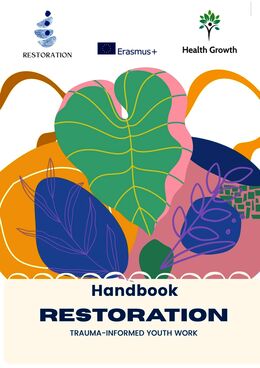
Restoration - manual for trauma-informed youth work
Practical manual for trauma-informed youth work containing trauma-sensitive methods, activities, facilitation tools, case studies, emotional regulation techniques, and self-reflection practices for creating psychologically safer youth spaces.
Aims of the tool
The manual aims to strengthen the capacity of youth workers, educators, and youth organizations to implement trauma-sensitive and psychologically safe approaches within non-formal education and youth work. It supports professionals in understanding trauma, recognizing trauma responses and emotional dysregulation, and responding to young people with greater empathy, reflection, and emotional awareness.
The tool provides practical methods, facilitation guidelines, activities, case studies, grounding and regulation techniques, and self-reflection practices that help create safer, more inclusive, and emotionally supportive environments for young people affected by stress, trauma, exclusion, discrimination, loss, or emotional difficulties.
At the same time, the manual promotes facilitator wellbeing, reflective practice, burnout prevention, and ethical boundaries, encouraging youth workers to balance emotional support, accountability, inclusion, and psychological safety in their everyday practice.
Description of the tool
This manual is a practical educational resource developed for youth workers, educators, facilitators, trainers, and youth organizations working with young people who may be affected by trauma, chronic stress, exclusion, emotional difficulties, discrimination, instability, or other adverse life experiences. The tool combines trauma-informed principles with non-formal education approaches and provides practical guidance for creating psychologically safer, more inclusive, and emotionally supportive youth work environments.
The manual includes theoretical foundations related to trauma, nervous system responses, emotional regulation, collective and individual trauma, the Window of Tolerance, and trauma-sensitive communication. It also contains practical activities, facilitation methods, grounding and de-escalation techniques, reflective exercises, case studies, and examples of good practices from partner organizations. Special attention is given to emotional safety, participation without pressure, trust-building, group dynamics, burnout prevention, and facilitator self-awareness.
The tool supports youth workers in understanding how trauma may influence participation, behavior, relationships, communication, learning, and emotional regulation among young people. It encourages facilitators to move from judgment toward reflective and emotionally aware practice while maintaining healthy boundaries and accountability.
Learning outcomes:
* increased understanding of trauma and trauma-informed youth work;
* ability to recognize trauma responses and emotional dysregulation;
* improved trauma-sensitive communication and facilitation skills;
* stronger skills in creating emotionally safe and inclusive group environments;
* increased awareness of fight, flight, freeze, and fawn responses;
* practical knowledge of grounding, co-regulation, and de-escalation techniques;
* improved reflective practice and awareness of personal biases;
* stronger understanding of burnout prevention, self-care, and facilitator wellbeing;
* increased capacity to adapt non-formal education methods to emotionally sensitive contexts.
Available downloads:
Disclaimer
SALTO cannot be held responsible for the inappropriate use of these training tools. Always adapt training tools to your aims, context, target group and to your own skills! These tools have been used in a variety of formats and situations. Please notify SALTO should you know about the origin of or copyright on this tool.
Tool overview
http://toolbox.salto-youth.net/5715
This tool addresses
Social Inclusion
It is recommended for use in:
Training and Networking
Behind the tool
The tool was created by
Health Growth Center
in the context of
TC Restoration
The tool has been experimented in
Training course
The tool was published to the Toolbox by
Petya Avramova (on 24 May 2026)
and last modified
22 May 2026
Comments
No comments have been posted yet.
If you want to comment on this tool, you need to be signed in with your MySALTO account. Sign in now